

Feeding Schedule for a 7-Month-Old Baby
Reading time:
Reading time:

By Dahlia Rimmon, MS, RDN
When your baby turns 7 months old, you have your first month of solids behind you, and you’re both starting to get more comfortable with this new journey. You’ve probably introduced a handful of new foods by now and baby’s eating feels less like an experiment and more a part of their routine.
That first month of solids was really about exploring and practicing the skills to get food to their mouth, mash it, and swallow. When your little one is 7 months old, you start to see more of it actually going down, rather than just getting played with. But with more food actually getting eaten, it can be hard to know what a full day of eating should look like.
This guide will help you know what to serve, how to serve it safely, and how milk and solids work together to keep your baby nourished. Just remember that every baby is different, and a feeding plan is meant to give you guidance rather than a strict rulebook.
Even as your baby gets better at eating solid food, breast milk or formula is still their main source of nutrition for the first year. It’s built to meet their nutritional needs at this stage, so think of solids as complementary to milk rather than replacing it.
Introducing the top allergens early and often can lower your baby’s risk of developing a food allergy by 51%. Those top 9 are milk, peanuts, tree nuts, eggs, soy, fish, shellfish, wheat, and sesame. By 7 months, aim to have introduced most of them, and continue to serve allergen foods a few times a week.
Babies’ iron stores from birth start running low around 6 months, which is part of why starting solids matters so much at this age. To help fill that gap to support brain development and immunity, offer iron-rich foods daily like beef, chicken, fish, beans, tofu, and iron-fortified cereal.
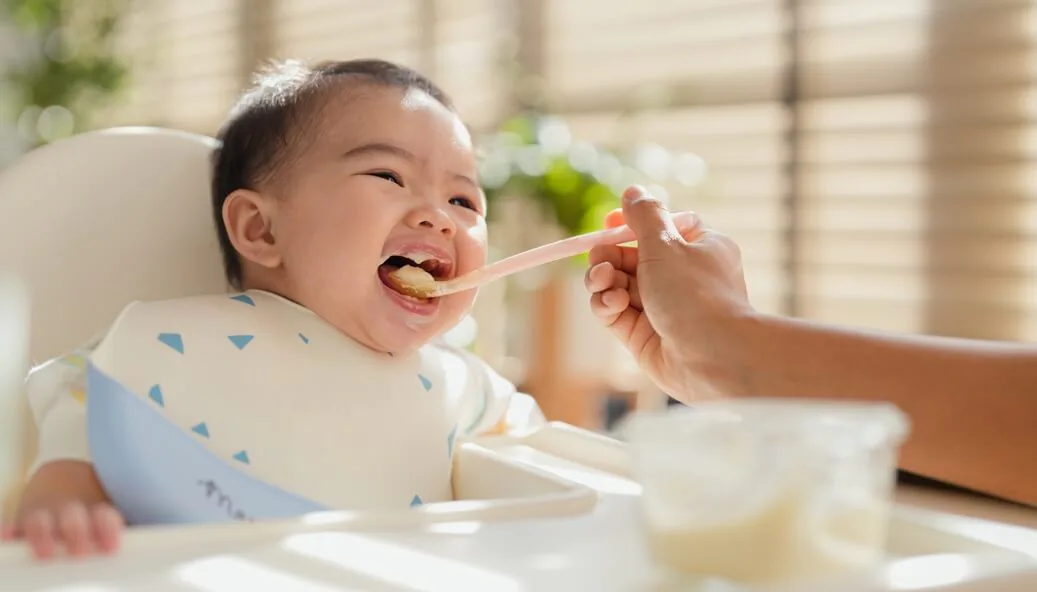
Don’t feel like you have to pick between purees and baby-led weaning (baby feeding themselves with food cut into safe sizes). What matters more is offering a variety of flavors and textures early on, and allowing baby to set the pace of the meal. It helps them tune into their own hunger and fullness cues while building fine motor skills.
As a general guideline, most 7-month-olds eat 2-3 solid meals a day alongside their regular milk feeds. A “meal” at this age might only be 1-2 tablespoons of food, so start there and offer more if your baby shows signs of hunger.
The number of bottles or breastfeeding sessions might not change, but the amount your baby takes per feed might slightly decrease depending on how much they’re eating. Breastfed babies often take in around 26-28 ounces a day, while formula-fed babies might take around 24-32 ounces.
Keep in mind that changes in appetite, teething, and sleep changes can all affect how interested in solids your baby is and how much milk they want, so let your baby lead rather than stressing about an exact number.
Although every baby’s feeding schedule might look different, here’s an example of a feeding plan that starts with a 7am wake-up.
7:00 am: Wake and breast or bottle
8:00 am: Solids meal #1
9:30 am: Nap
11:30 am: Breast or bottle
12:30 pm: Solids meal #2
1:30 pm: Nap
3:00 pm: Breast or bottle
4:00 pm: Optional Solids Meal #3
5:00 pm: Optional cat nap
6:30 pm: Breast or bottle
7:00 pm: Bedtime
Depending on your family’s lifestyle, your baby’s schedule might look a little different. The main things to keep in place are about 2-3 hours of daytime sleep across naps and 2-3 solid meals a day, with solids offered after milk feeds so milk stays the priority.
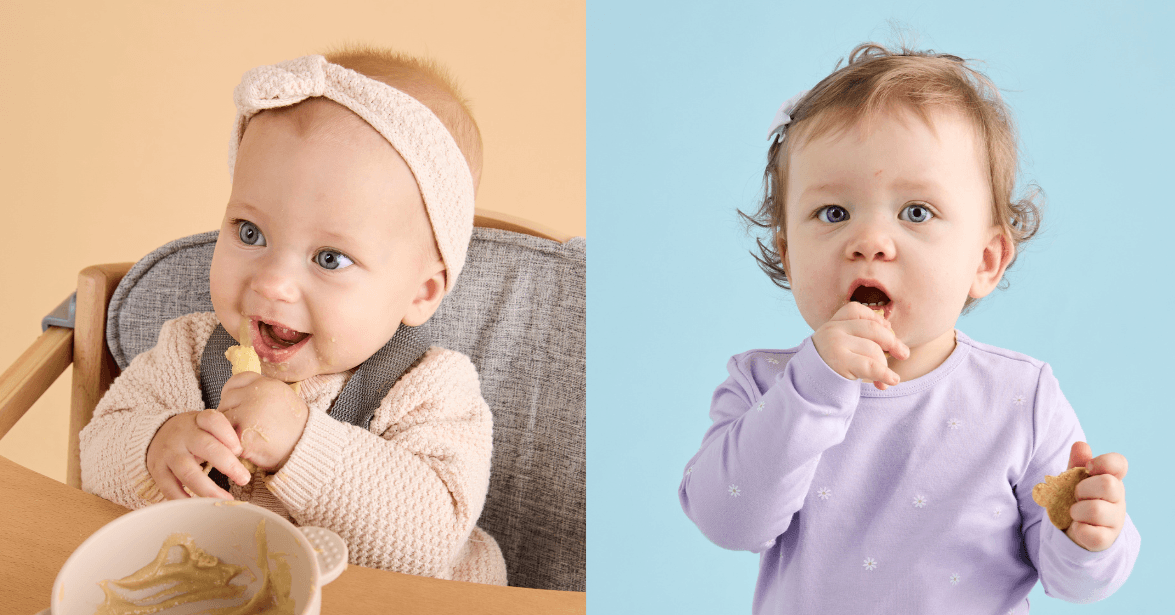
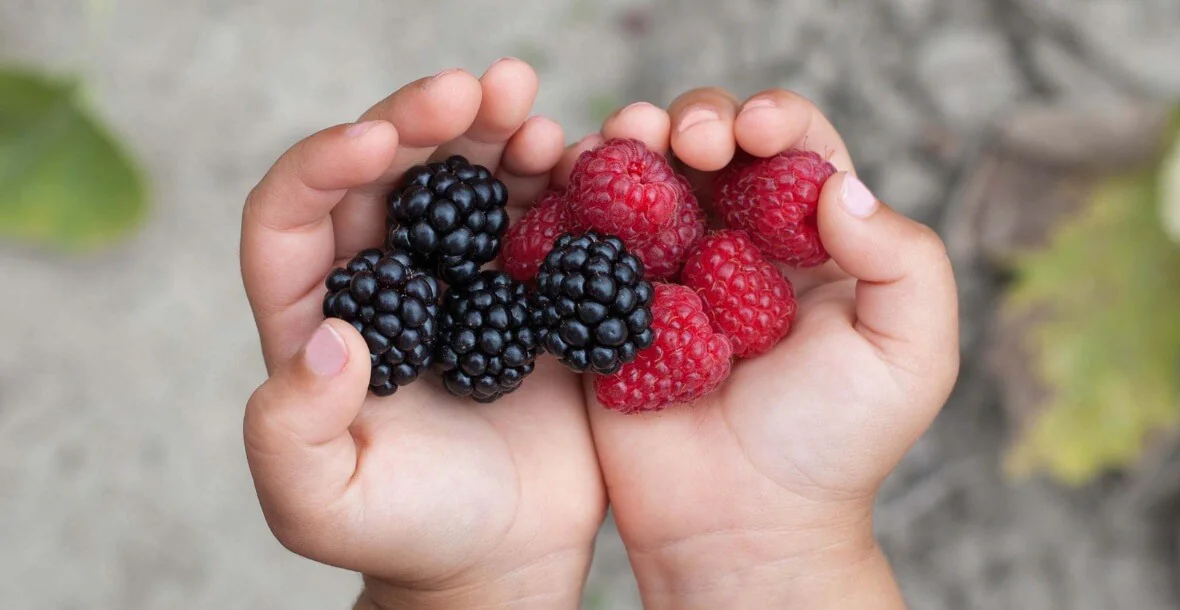
At 7 months, you can serve foods as purees, finger foods, or a mix of both. Your baby will pick up food with their whole hand, known as the palmar grasp, while the more precise pincer grasp doesn’t show up until closer to 9 or 10 months. Offer foods that are large enough for baby to grip and soft enough to squish easily between their gums.
Here are a few meal combinations that mix purees and finger foods, keep things nutritionally balanced, and include some allergens:
Little Bellies 7+ months baby snacks are a great option for your little one because they come in a variety of shapes to help your baby learn to self-feed with a melt-in-the-mouth texture for safe eating. Plus, they aren’t sweetened or salted, just simple ingredients in a convenient and on-the-go format.
At 7 months, the foods you serve help shape your baby’s palate and can even prevent picky eating in toddlerhood.
Here are a few easy ways to build in the variety your baby needs:
Starting solids can feel like a whole new world to figure out. The food prep, allergen introduction, clean-up, and new schedules can be a lot to manage. But like most things in parenthood, it gets easier over time as you and your baby learn these new skills together.
The Little Bellies 7+ months snack range is a great addition to your journey of starting solids because it’s an easy way to introduce new tastes and textures to your 7-month-old.
Start by serving 1-2 tablespoons of food per solid meal, and offer more if your baby is showing signs they’re still hungry. As for milk feeds, breastfed babies often take in around 26-28 ounces a day, while formula-fed babies might take around 24-32 ounces.
Most 7-month-olds keep the same number of bottles or breastfeeding sessions per day, with 2-3 solid food meals added in.
Try to work in foods high in iron (beef, chicken, fish, beans, tofu, and iron-fortified cereal) along with the top 9 allergens (milk, peanuts, tree nuts, eggs, soy, fish, shellfish, wheat, and sesame). Offering a variety of tastes and textures matters far more than any one specific food.
Offer finger foods that are soft and easily mashable by your baby’s gums and big enough for them to grab with their full hand like a large strawberry, omelet strip, or broccoli floret. Little Bellies 7+ months snacks are designed for this age range and offer a variety of tastes and textures for your baby to explore.
Yes, a 7-month-old can have small sips of water with meals, about 4-8 ounces per day.



Let’s Make It Official
Get the latest news on parenting tips, food play hacks, promotions and giveaways!
Subscribe Now