

Berry good start: Introducing colorful berries to babies
Reading time:
Reading time:
By: Dahlia Rimmon MS, RDN
I’m convinced my kids are personally keeping the berry industry in business. A fresh carton barely makes it into the fridge before it’s empty. But believe it or not, they weren’t always berry lovers. Like many foods, it took time, patience, and dozens of exposures before they became a household favorite. Now, berries are one of the foods they ask for most, but getting started can feel overwhelming and confusing. Can babies eat berries and berry fruit snacks? Are they safe? And what is the best way to serve berries for babies? If you’re asking yourself these questions, you’re in good company.
As a mom of four and a pediatric dietitian, I know how exciting (and a little nerve-wracking!) it can feel to serve those first foodsl. My goal is to help you feel confident introducing berries into your baby’s diet in a way that’s safe, simple, and suited to their age and stage. Let’s walk through everything you need to know to get started.
Before we get started, let’s talk about why berries are such a great addition to your baby’s diet. Strawberries, blueberries, raspberries, and blackberries are naturally sweet, full of flavor, and come in a variety of textures and colors.Berries are also nutrient-dense, and a single bite offers a wide range of important nutrients. They’re rich in fiber, vitamin C, and antioxidants, all which support your baby’s growth, digestion, and immune system.
Babies can eat berries once they begin solids, typically around the 6 month mark. The key is ensuring they’re served in a safe, developmentally appropriate way that matches your baby’s feeding and oral motor skills. In the early stages of eating, this may mean serving berries as smooth purees or as a well-mashed fruit. As your baby gets closer to 9 months, you can begin supporting their pincer grasp (the ability to pick up small pieces of food with the index finger and thumb) by offering lightly smashed berries that are easier to pick up and self-feed.
Keep in mind that each berry has a slightly different size, shape, and texture, which affects how it should be prepared. We’ll go into more detail below on how to serve each berry by age.
Whole berries can be a choking hazard because of their small, round shape. That’s why it’s important to prepare berries in a way that matches your baby’s oral motor skills. Keep in mind that families may take different approaches when starting solids. Some prefer traditional spoon-feeding, others follow baby-led weaning (BLW), and many use a combination of both. Regardless of the method, berries should always be modified for safety.
Start with puréed or well-mashed strawberries. You can serve them on their own or mix them into yogurt, oatmeal, and cottage cheese. Around 9 months, you can offer soft strawberries that are thinly sliced. By 12 months, you can continue with sliced strawberries and also introduce soft, quartered pieces.
Similar to strawberries, you can offer blueberries once your baby begins solids. Serving them as a puree or well-mashed. In the early months, you can also blend them into smoothies or cook them down into a soft compote and mix them into warm cereal or yogurt.
As your baby gets closer to 9 months and begins developing their pincer grasp, you can offer flattened blueberries. Flattening them into a disc shape reduces the choking risk, since whole, round, and firm blueberries can be a choking hazard.
Once your child is closer to 3 or 4 years old (assess their readiness!), you can introduce whole blueberries. At this stage, it’s important to supervise closely, model how to chew properly, and encourage them to eat one berry at a time.
For babies just starting solids, offer pureed or mashed raspberries. Raspberries have tiny seeds and slightly tart taste, so they provide a fun introduction to new textures and flavors. As your baby gets closer to 9 months and begins developing their pincer grasp, you can flatten whole raspberries and have them practice self-feeding. You can also stir mashed raspberries into yogurt, oatmeal, or cottage cheese for an easy, nutrient-rich meal or snack.
When your child is around 3 or 4 years old, you can begin offering whole raspberries. Make sure they are ripe and soft. Continue to supervise during meals, encourage them to chew thoroughly before swallowing, and model eating one berry at a time.
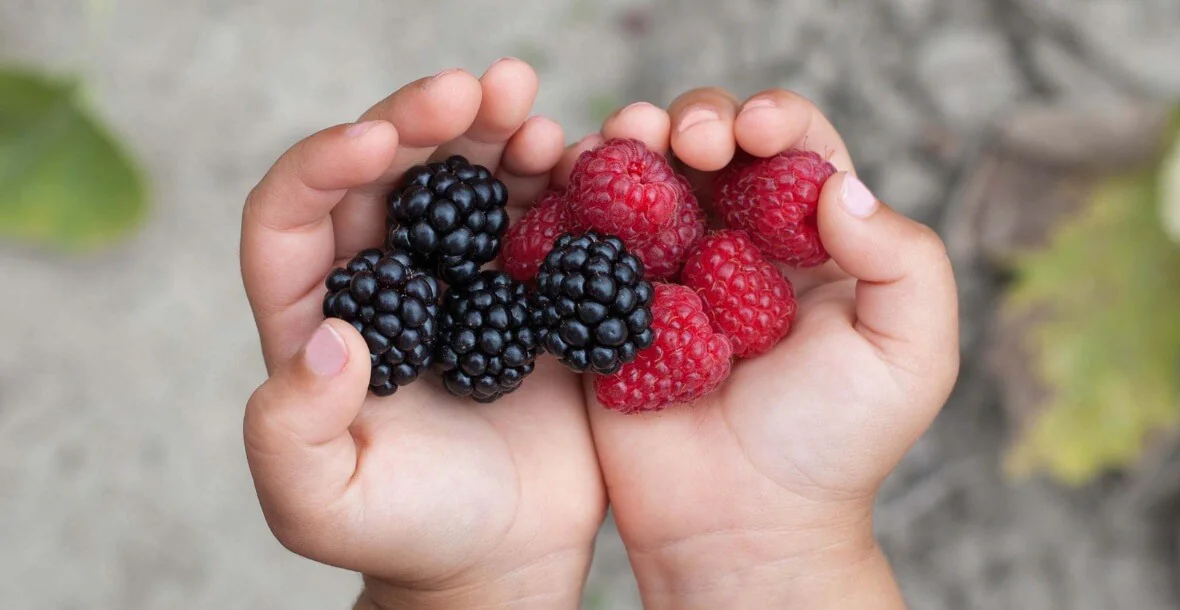
Blackberries can be pureed or mashed for early eaters. Around 9 months, serve blackberries cut into quarters lengthwise. Around 12 months, you can move to blackberries cut in half lengthwise. Once your child is around 3 to 4 years old, they can usually enjoy whole, soft blackberries. Continue to model biting, chewing thoroughly before swallowing, and eating one at a time.
Berries add color, flavor, and nutrition to your baby’s meals. They’re also a fun food for sensory exploration, helping babies build confidence with new tastes and textures. Here are some simple ways to serve berries to your baby:
Offering your baby a variety of textures is an essential part of your baby’s development. It helps build oral motor skills, confidence with eating, and supports healthy, adventurous eating habits. Aim to introduce as many textures and flavors as possible between 6 and 9 months, as it’s a critical period for developing taste and texture preferences.
Keep these tips in mind as you offer berries (or any new food):
Berries are a delicious, nutrient-rich food that can be part of your baby’s diet right from the start. As your baby grows, they’ll enjoy exploring the many flavors, colors, and textures that berries have to offer. Little Bellies is here to support every stage of your baby’s feeding journey from organic fruit snacks for babies, like Pick-Me Sticks and Puffs to Softcorn and Nibblers. Enjoy watching your baby discover the wonderful (and messy!) world of berries.
Yes, whole berries pose a choking risk because they are small, round, and firm. You can modify their texture and shape to safely serve them to babies.
Keep offering! It can take dozens of exposures before a baby accepts a new food.
Most berry seeds are small and generally safe for babies to eat. If your baby is having difficulty with the texture, try pureeing them to make it easier to handle.
The sugar in berries is naturally occurring and comes with fiber, vitamins, and antioxidants. For children under 2, it’s best to avoid foods with added sugars.




Let’s Make It Official
Get the latest news on parenting tips, food play hacks, promotions and giveaways!
Subscribe Now