

Starting Solids: Helping Your Baby Learn to Self-Feed
Reading time:
Reading time:
By: Leah Hackney, RD, LD, CSP
Starting solids is an exciting milestone, but for many parents, it can also feel overwhelming. You may be wondering: How do I know my baby is ready? Should I spoon-feed or try baby-led weaning (BLW)? What if my baby chokes? These concerns are entirely normal. As a pediatric dietitian, I want to reassure you that self-feeding is a gradual process, and your baby is built to learn. In this article, I’ll discuss transitioning to solids, support self-feeding skills, and provide suggestions that are both nutritious and developmentally appropriate.
Transitioning from breastmilk or formula to solid foods is a significant change for both you and your baby. The American Academy of Pediatrics (AAP) recommends introducing solids around 6 months of age when babies show signs of readiness, such as good head control, sitting with minimal support, and showing interest in food (AAP, 2022).
There are two main approaches to introducing solids:
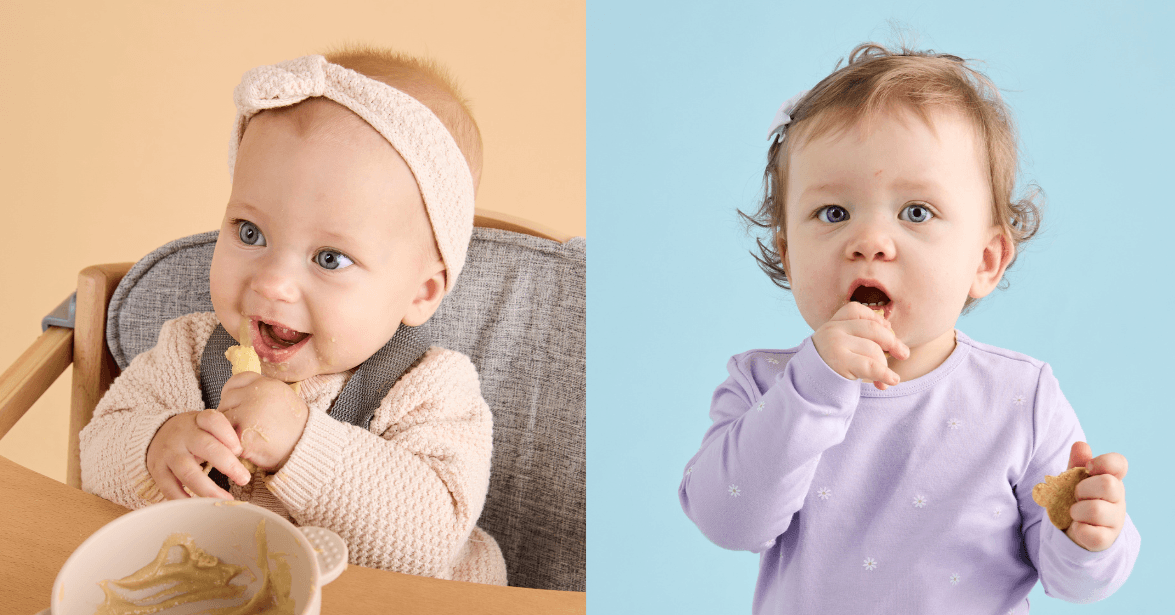
Parents offer purees using a spoon, gradually increasing texture as baby’s skills develop. I like to note that spoon feeding can be done in a way that allows the baby to support self-feeding skills, too! Pre-loading the spoon and waiting for the baby to lean in for a bite or pick it up with their hands is one way to start.
Babies self-feed soft, appropriately sized pieces of food from the start, allowing them to control their intake. BLW tends to support independence and motor skills development immediately by allowing babies to bring the soft finger foods to their mouth (Rapley & Murkett, 2019).
Some families find a combination of both works best!
Teaching babies to self-feed is about more than just eating—it’s a critical part of their motor development. Around 6-7 months, babies begin using their palmar grasp (whole-hand grip) to pick up larger pieces of food, and by 9-12 months, they refine their pincer grasp (thumb and forefinger) to pick up smaller pieces (Cameron et al., 2015). More on this in the article Playing with Food Benefits: Developing Fine & Gross Motor Skills.
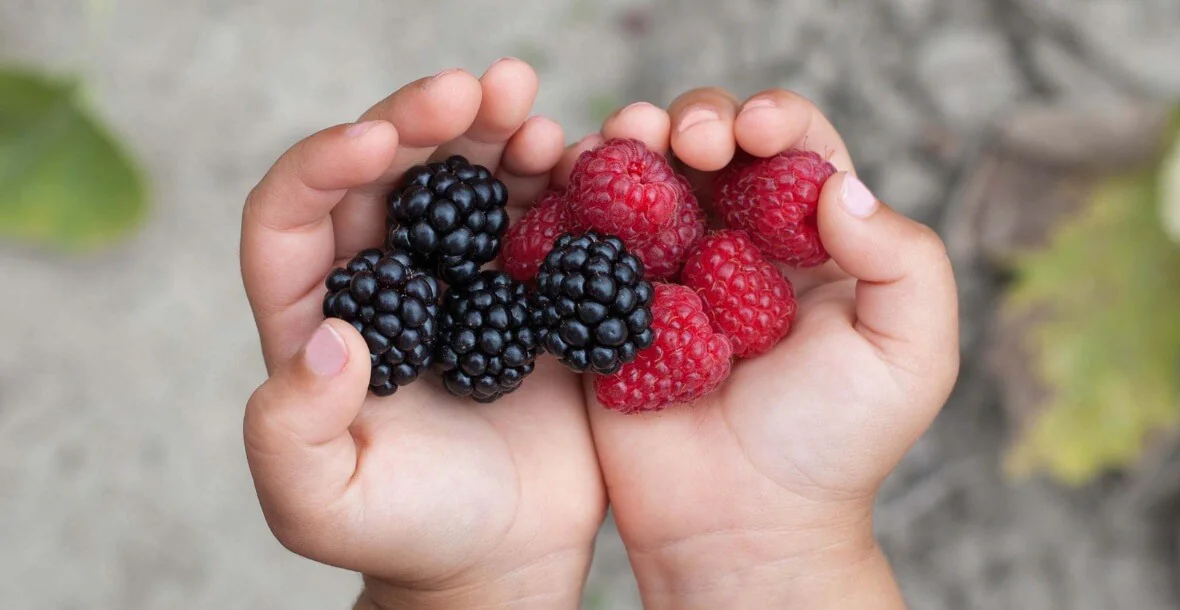
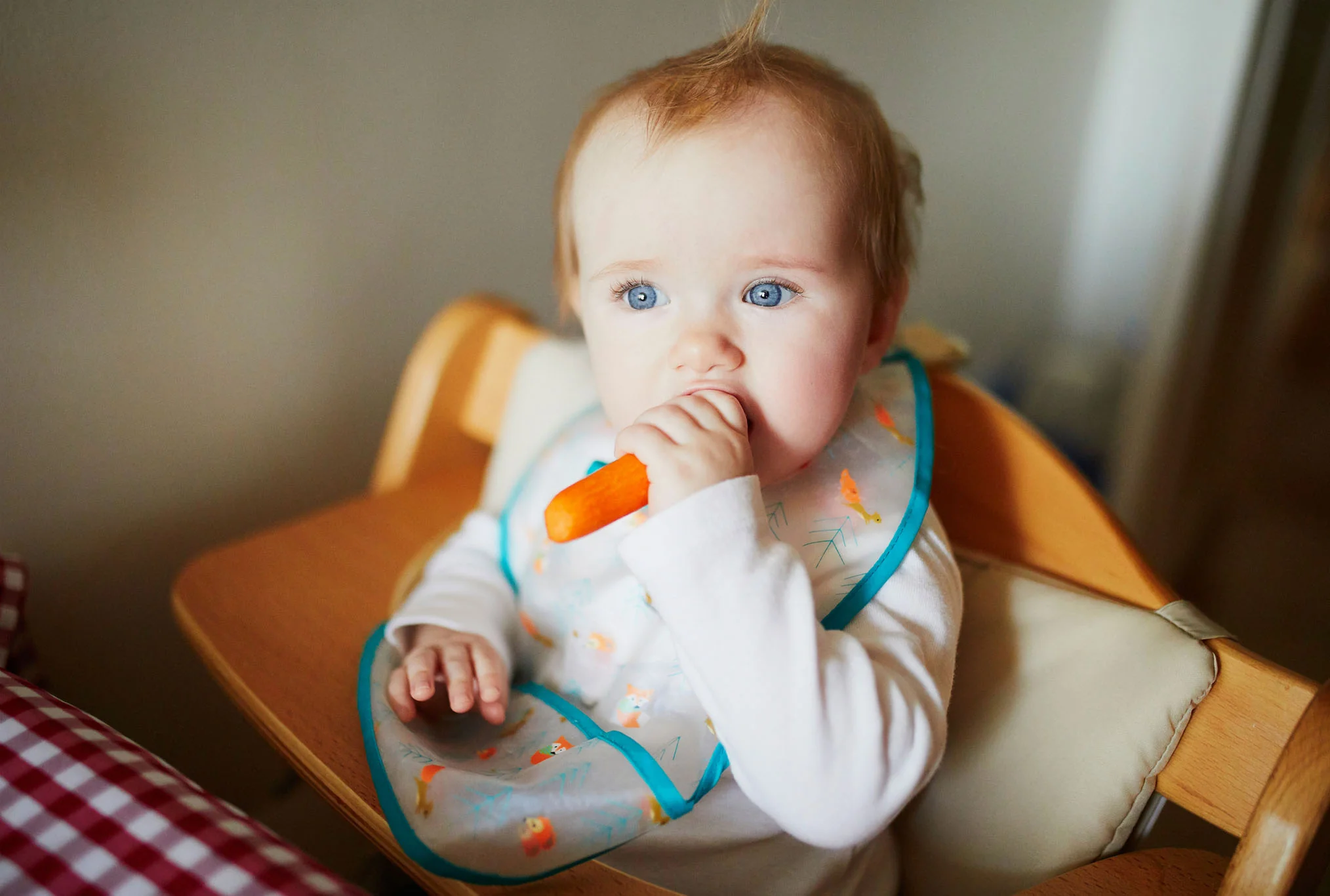
Offer soft, stick-shaped foods that babies can hold, such as cooked sweet potato sticks, banana slices, avocado, steamed broccoli, or cauliflower.
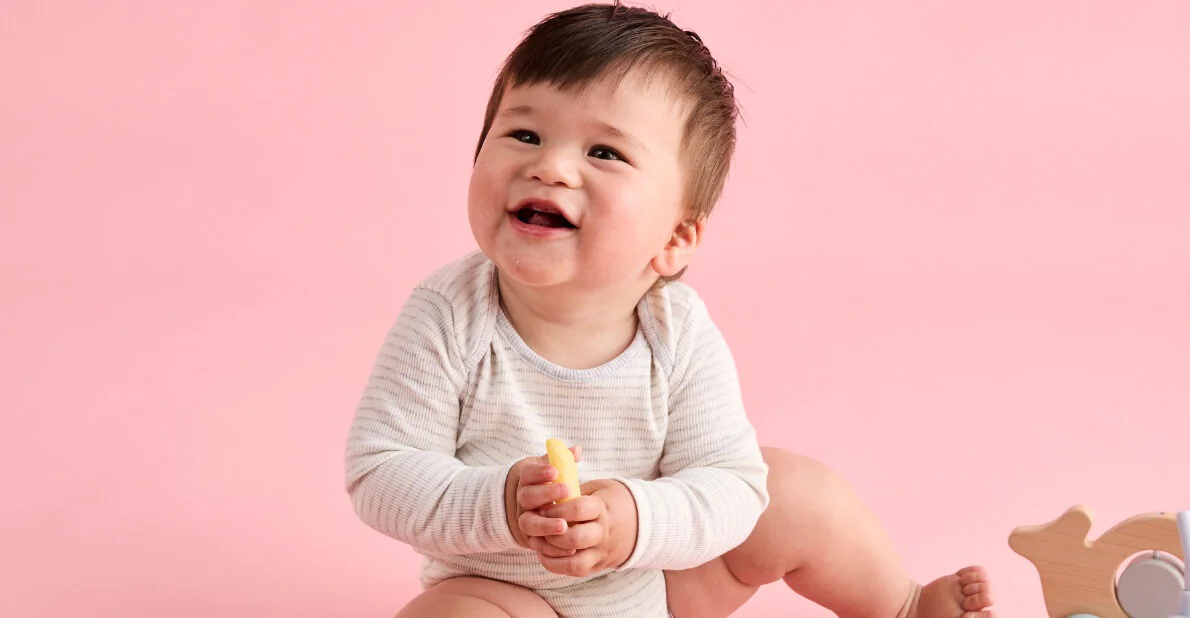
The food should be easy to mash (ripe banana or avocado consistency) or be dissolvable once in the mouth. Dissolvable foods may have subtle air pockets or “melt” when in contact with saliva. Some examples are light, quick-to-melt snacks like Little Bellies puffs, which can help babies practice bringing food to their mouth safely. Plus, they’re great when you’re on the go!
Babies learn by watching. Eat together and exaggerate chewing motions.
It’s messy! The food may be slippery and hard to pick up. Babies will play, squish, and explore food before they learn to eat effectively.Offer soft, stick-shaped foods that babies can hold, such as cooked sweet potato sticks, banana slices, avocado, steamed broccoli, or cauliflower.
Parents often worry about choking when offering finger foods. But note that current research indicates there’s not an increased risk for offering safe finger foods versus purees (BLISS, 2015).
The most important thing is that parents know the difference between what gagging looks and sounds like versus choking and what to do in a choking event.
Gagging is a normal part of learning to eat. Gagging is a protective reflex and looks like coughing or making noises while food is pushed forward. Choking, however, is often silent, as food blocks the airway. To keep mealtimes safe:
Providing a variety of safe, nutritious foods helps babies develop a positive relationship with eating. Here are some ideal first finger foods so you can let your baby practice their self-feeding skills:
As parents, our role is to create a positive, pressure-free eating environment. Focus on offering a variety of textures and flavors, allowing your baby to explore at their own pace. Some key reminders to support self-feeding:
Introducing solids and self-feeding is a journey, not a race. Some days, your baby may eat enthusiastically; other days, they may refuse food altogether. This is normal! Keep mealtimes relaxed, provide safe foods for practice, and trust that your baby is learning at their own pace. If you have concerns about feeding, talk to your pediatrician or a pediatric dietitian.



Let’s Make It Official
Get the latest news on parenting tips, food play hacks, promotions and giveaways!
Subscribe Now