

Baby Puffs and Beyond: A Texture Progression Guide from Squish to Crunch
Reading time:
Reading time:
By Kayla Kim, MOTR/L (Occupational Therapist and Feeding Specialist)
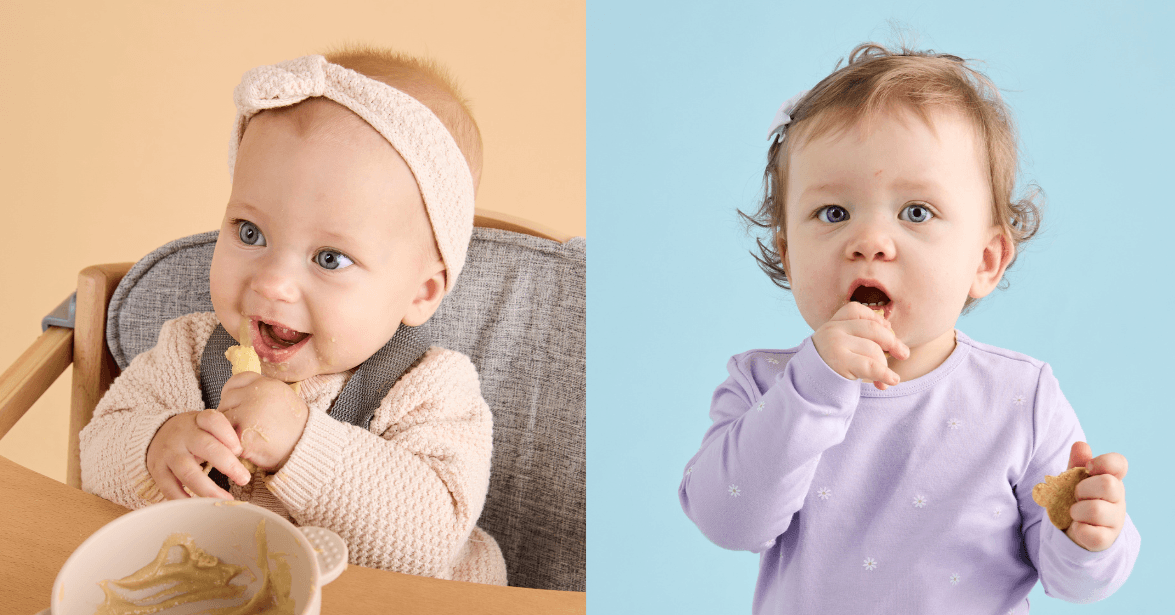
Starting solids with your baby is an exciting time! Watching your little one pick up their very first finger food and bring it to their mouth is a milestone worth celebrating. But it can also be stressful knowing which textures to offer – and when to offer them. This guide is here just for that; to help you feel confident in your texture progression journey and know exactly when and how to introduce new crunch textures to your little one, all the way from your baby’s first soft puff to their first big crunch!
KEY TAKEAWAYS
What Are Baby Puffs and Why Are They a Popular First Finger Food?
Baby puffs are soft, dissolvable snacks designed for infants. They are ideal for early self-feeding
because their melt-in-the-mouth texture does not require any teeth but still encourages oral motor skill development. Babies first learn to chew before 6 months by using their bite reflex and mouthing on toys. With teethers and first foods, babies start to use their gums to practice chewing before their teeth come in. Baby puffs support chewing development and confidence by allowing them to practice the skills they will need for eating harder textures as they get older. They also come in a variety of shapes and sizes, helping your baby find success and practice with grasping at each age and stage.
Why Texture Progression Matters
Providing babies with a variety of textures and tastes supports their development in more ways than one:
When starting solids, there is no one right way or pace – whether you are spoon-feeding, following a baby-led weaning approach, or a mix of both. What matters most is following your baby’s cues. Your baby is ready to start solids when they can sit upright without support and can bring utensils and teethers to their mouths for exploration (typically around 6 months of age). Start with one opportunity per day for food exploration (check out our feeding schedule guide for 6 months old here), gradually increasing the food exploration opportunities until you reach three opportunities per day around 9+ months of age, and three meals plus 1-3 snacks per day by 12+ months of age. For more on getting started, see our guide to introducing solids.
No matter which approach you take when starting solids, introducing a variety of textures early matters: research suggests that delaying lumpy solids beyond 9 months is associated with greater feeding difficulties later on. Introducing a variety of textures to babies will also support their ability to learn how to move the food around in their mouth, chew, and swallow safely. Eating is a skill that requires practice, repetition, and repeated exposure. The more opportunities you give your baby to practice with a variety of textures, the more confident and competent they will become – and that’s exactly where texture progression comes in.
From Squish to Crunch: Texture Across the Age and Stage Ranges
It can be helpful to understand your baby’s development at different ages and stages. Here are some guidelines for working through textures with your little one, but remember, these are guidelines and not hard and fast rules! Your baby may need slightly more or less time with a texture before they are ready to move on.
7+ Months – Soft, Melt-in-the-Mouth First Finger Foods
At this stage, long stick-shaped foods work well because they are easy for little hands to grab and hold using the palmar grasp — think steamed sweet potato sticks, ripe banana, or soft cooked broccoli florets. Dissolvable snacks are also a great choice here, as they encourage oral motor practice without requiring any chewing, and also provide a new texture for your little one to explore. Little Bellies Pick-Me Sticks are a popular first option – they are the right shape for a palmar grasp, dissolve easily, and are not sweetened or salted. Try them in other flavors or in the mini version – browse the full 7+ months range for more ideas.
10+ Months – Building Confidence with New Shapes
As the pincer grasp develops, smaller and more varied shapes become manageable — and this is a great time to start introducing new flavors alongside familiar textures. Try pieces of soft cooked rotini pasta, squished or halved blueberries, or soft cooked carrot cubes. For a convenient snack option, Little Bellies Softcorn is perfect pincer grasp practice, while the Little Bellies Paws shape offers something new for little fingers to explore. See the full 10+ months range to find the right fit for your baby’s stage.
12+ Months – The Big Texture Step Up
This is the most noticeable texture shift in the whole journey. Your toddler is now ready to tackle foods that require real chewing — like small pieces of soft cooked meat, or small cheese cubes. In terms of snacks, this is a great stage to move beyond puffs and explore formats like crackers and bars alongside dissolvable options. Little Bellies Nibblers are a great introduction to crunchier textures at this stage, and the Banana, Date & Oat Bars offer practice with chewier formats. Explore the full 12+ months range for everything available at this stage.
Textures to Avoid
It’s exciting to work with your little one through different textures! But some foods remain unsafe regardless of the ages and stages mentioned here. Hard, crunchy raw foods like whole nuts, raw carrots, and raw apple chunks, round slippery foods like grapes or cherry tomatoes, sticky foods like big globs of peanut butter, and snack foods like popcorn are all choking hazards for babies and young toddlers. Preparing foods in age-appropriate sizes will decrease the likelihood of choking episodes for your little one. You can learn more about food preparations here. And when in doubt, if you can squish the food between your finger and thumb, it is likely safe for your baby to manage.
*Pro-tip: try the food yourself first!
If you are not sure how dissolvable or chewable a food is, test it out yourself. Note if the food dissolves on its own, dissolves with sucking, or needs full chewing. This, along with your child’s age and stage of development, will help you decide if it is safe to give.
How to Know When Your Baby is Ready for the Next Texture
While there are general age ranges to help guide you to the next texture, it’s important to follow your baby’s own pace and readiness cues. You will know your little one is ready for a harder texture when they can safely and easily manage (chew and swallow) the textures you are already giving them. Your baby may need more practice with a texture if they are spitting out more than they are swallowing, avoiding the texture by not bringing it to their mouth, or having a hard time picking up the food to grasp and bring it to their mouth. If your baby can reach, grasp, and bring the Pick-Me sticks to their mouth with ease and safely chew and swallow them, they are most likely ready for the Softcorn to practice their pincer grasp while working towards managing smaller pieces of food safely!
It’s also important to know that just because your baby is getting more teeth does not necessarily mean they are ready for the next texture! Pay attention to the signs of success by watching how they manage the food in their mouth before progressing to the next texture. Texture progression is a journey that requires skill practice and does not need to be rushed!
Lastly, some babies will adjust to and be ready for a new texture on the first offering, however, this is not always typical. Your baby may take longer to adjust and need several offerings of a new food before they feel safe tasting it. When presenting the new texture, keep your reactions neutral and allow your little one to explore it at their own pace. And if your baby refuses the new food on the first presentation, don’t panic! Keep offering the food to support their familiarity, skill-building, and confidence.
*Pro tip: Model interacting with the new food yourself by touching, smelling, licking, or biting!
A Note on Gagging
If you are new to introducing finger foods, gagging can feel alarming – but it is actually a normal and protective reflex. Gagging is your baby’s way of moving food that has gone too far back in their mouth to the front, where they can manage it more safely. It is not the same as choking. Choking is silent, while gagging is typically loud with coughing and gurgling sounds. As your baby gets more practice with different textures, gagging usually becomes less frequent. If you ever feel unsure, it is always a great idea to take an infant first aid course, so you feel more confident responding if you need to. And as always, supervise your little one during mealtimes and don’t put your fingers in your baby’s mouth during gagging, as this can push the food further back in their mouth.
Tips for Introducing New Textures with Confidence
Remember, this is a journey that should feel good for you and your baby. When you read and respond to your own baby’s readiness cues, you are setting them up for positive food interactions that will benefit mealtimes for years to come. We want mealtimes to feel successful, positive, and even fun – because that’s when children learn best.
From the first introduction of food to their first crunch texture, your baby has learned so much and come so far! Don’t forget to enjoy the journey and embrace the mess.
Ready to find the right snack for your little one’s stage? Explore Little Bellies’ full age-and-stage range to find the right puff, cracker, or bar for your baby or toddler!
Babies can have dissolvable, melt-in-the-mouth puffs after starting solids around 7+ months.
Yes! Baby puffs are safe for babies without teeth because of their melt-in-the-mouth texture. Babies also use their gums for chewing practice before they have teeth.
Baby puffs are dissolvable and melt in the mouth. Toddler snacks are firmer, crunchier, and require more chewing skill.
When your baby can safely manage the current texture you are offering by chewing and swallowing, they are most likely ready for the next texture! If they are spitting out more than they are eating, keep providing opportunities for practice! Remember, eating is a skill that is learned with repeated practice.
**This blog post is intended for informational purposes only and is not a substitute for professional medical advice.
References



Let’s Make It Official
Get the latest news on parenting tips, food play hacks, promotions and giveaways!
Subscribe Now