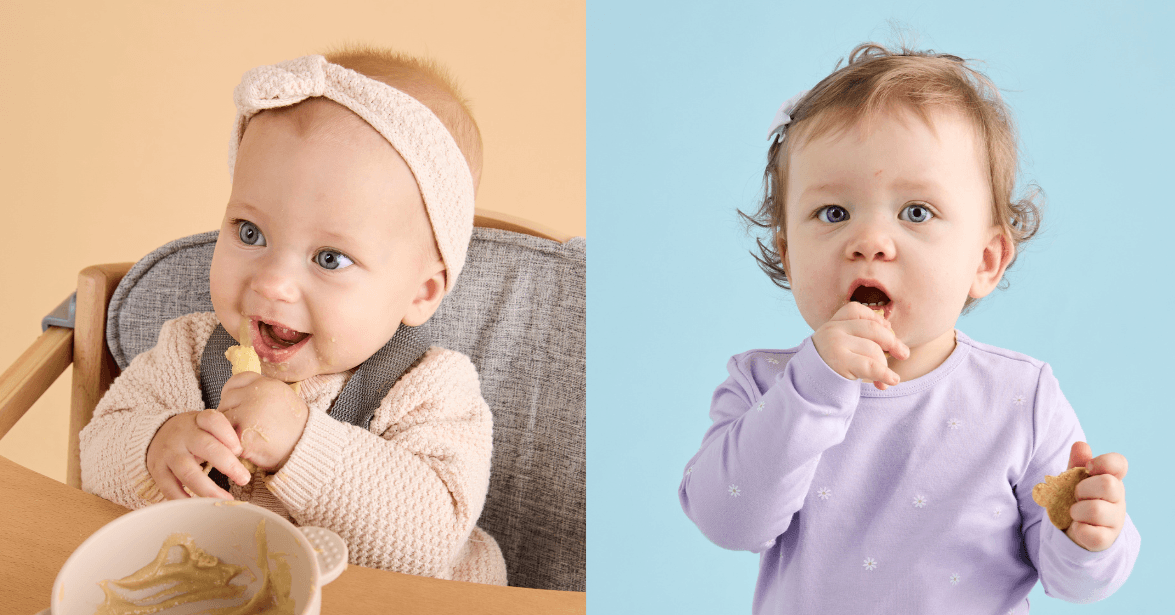


Introducing textures to babies
Reading time:
Reading time:
By Dahlia Rimmon MS, RDN
Key Takeaways:
Introducing solid foods to your baby is exciting, fun, and messy, but it can also feel a little overwhelming and daunting. What should you offer? How do you know if they like it? How much is enough? One of the biggest concerns for many parents is texture: which textures to start with, and how to progress from smooth, soupy purees to chunkier foods and finger foods. In this article, we’ll explore why food textures are important, share practical ways to serve textured foods for babies, and offer tips and tricks to help your baby explore a variety of textures safely and confidently.
Introducing new textures can feel like uncharted territory. Many parents worry about choking hazards, gagging, or whether their baby is ready for thicker foods or finger foods. But exploring different textures is more than a mealtime milestone – it’s an essential part of your baby’s development. Introducing a variety of textures helps babies build oral motor skills, gain confidence with eating, and develop healthy, adventurous eating habits that can last a lifetime.
Here’s how introducing different textures can help your baby:
Experts recommend exposing babies to as many textures and flavors as possible between 6 and 9 months, a critical period for developing taste and texture preferences. Offering a variety of textures and flavors during this time helps babies discover what they like and don’t like, while setting the foundation for confident, adventurous eating habits down the road.
| Benefit | How it helps baby | Example |
| Build oral motor skills | Strengthens the muscles needed for chewing and swallowing | Thick purees, mashed foods, soft finger foods |
| Encourages food exploration | Curiosity and confidence | Allowing babies to play with their food and get messy |
| Supports fine motor skills | Palmar grasp and pincer grasp | Avocado strips or baby puffs |
| Lays the foundation for complex eating skills | Prepares baby for eating more complex foods | Varied textures over time |
| May prevent picky eating | Builds tolerance and acceptance of new textures and flavors | Offering multiple textures each day or meal |
When it comes to starting solids, most parents find themselves deciding between two main approaches: spoon-feeding purees or baby-led weaning (BLW). With spoon-feeding, caregivers feed babies smooth purees using a spoon. The parent controls the pace, portion size, and how much food goes on the spoon. With BLW, babies feed themselves with age-appropriate, soft finger foods. Instead of being spoon-fed, babies take the lead, explore textures with their hands, and set the pace of the meal.
There’s no “right” or “wrong” way to feed your baby. Some families start with purees, some dive straight into BLW, and many find a middle ground that combines both. What matters most is exposing your baby to a variety of textures. With purees, this can mean progressing from thin and smooth to thick, mashed, and lumpy. With finger foods, it might look like starting with a soft banana or creamy avocado, then moving on to shredded chicken or a spongy omelet.
While variety is important, some textures simply aren’t safe for babies in the early stages of eating. Foods that are too sticky or slippery, gummy, hard, or tough are too difficult for babies to chew and maneuver in their mouths and increase the risk of choking. Examples include foods like gummy candies, spoonfuls of nut butter, raw hard vegetables, whole nuts, popcorn, or large chunks of meat and cheese. At this stage, babies need foods that are soft enough to be easily squished between the fingers to ensure that they can safely mash and gum the food without difficulty.
With finger foods, it’s not just texture that matters – how the food is cut, its size, and its shape are equally important for both safety and skill-building. Babies need food that matches their stage of development.
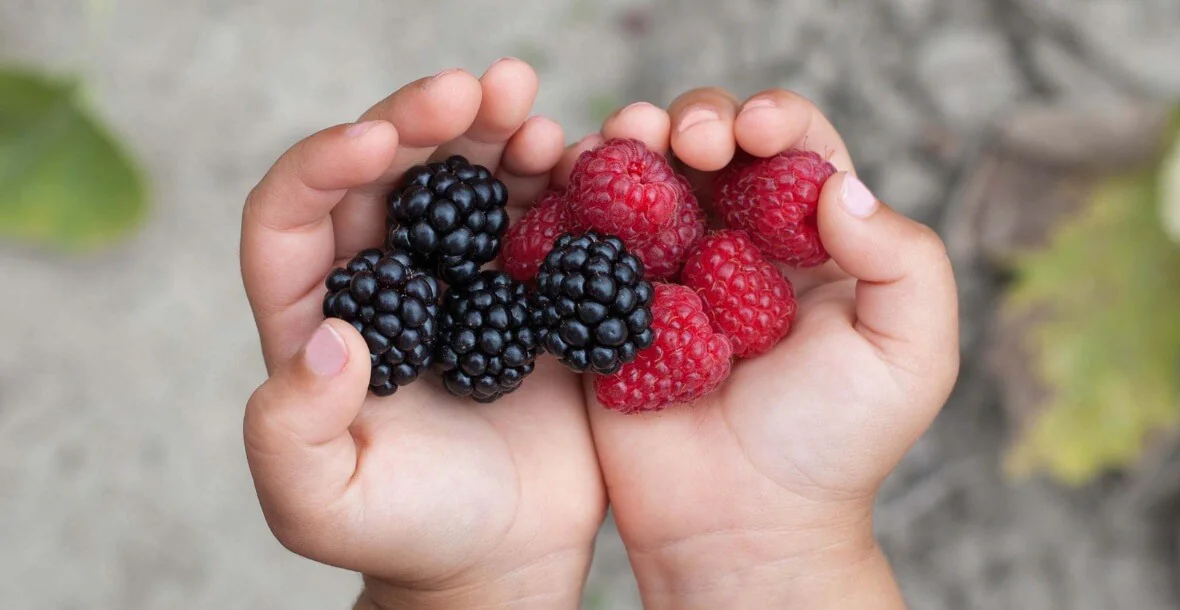
Certain food shapes can be especially risky for babies because they increase the chance of choking. Small, round foods like grapes, blueberries, cherry tomatoes, and chickpeas can easily slip into the airway and block breathing. These foods can be offered safely if they’re modified – cut into smaller pieces, smashed, quartered, or pureed, depending on the food.
When introducing new foods or textures, it’s important to remember that it can take time (sometimes dozens of exposures!) for babies to become comfortable with them. The key is consistency and giving your baby plenty of opportunities to see, touch, and taste them so they become more familiar. Here are some practical tips to support your baby’s texture progression:
It’s completely normal for babies to gag when trying a new texture. This happens because they are learning how to move food around in their mouth. Gagging is one of the body’s safety mechanisms that protects the airway, and you may hear coughing, gurgling sounds, and the food will come back to the front of the mouth. Gagging is especially common when babies are just starting solids, and while it can be alarming, it’s important to stay calm. Trust that your baby’s reflexes are working as they should, and avoid putting your fingers in their mouth. Doing so can accidentally push food further back and increase the risk of choking.
Introducing your baby to new foods and textures can be messy, unpredictable, and sometimes a little stressful – but it’s also one of the most exciting parts of their development. Every baby moves at their own pace, so the most important thing is to offer a variety of textures consistently and frequently. With patience, persistence, and plenty of messy moments, you’ve got this!
To learn more, explore Introducing solids: spoon feeding vs BLW, Starting solids: helping your baby learn to self-feed, and How to introduce solids to a baby.
It depends how you start solids with your baby. If you go the traditional route and spoon-feed your baby, you can start with smooth purees and progress to mashed, lumpy purees. You can also offer smooth and chunky purees at the same time. If you start with BLW, offer a variety of soft finger foods from different food groups.
Between 6 to 9 months, serve soft, finger-length strips that are long enough to stick out of your baby’s fist. Around 9 months, switch to pea-sized pieces of soft finger foods to help your baby practice the pincer grasp.
Avoid hard, round, sticky, or super chewy foods like whole nuts, raw hard vegetables , popcorn, large chunks of meat or cheese, and spoonfuls of nut butter. Some of these foods can be modified in shape and texture for safety. Other foods like popcorn should be avoided until after the fourth birthday.
Gagging is noisy and you may hear your baby cough or make gurgling sounds. Let your baby clear the food on their own. Choking means the airways are blocked and is silent with no effective cough. If your baby is choking, call emergency services and give age-appropriate first aid, if trained.
Related articles: toddler breakfast ideas, food for picky toddlers, sweet potato baby food recipe, best fruits for babies and baby food with fiber to help fend off baby constipation.




Let’s Make It Official
Get the latest news on parenting tips, food play hacks, promotions and giveaways!
Subscribe Now