At 8 months, games can support five key areas: gross motor (assisted standing, rocking and bouncing), fine motor (picking up puffs, fill-and-dump play), language (picture book reading, singing songs), cognitive (peek-a-boo, search-and-find toys), and emotional development (chase games, mirror faces).
Short, frequent play sessions (5–10 minutes) tend to work better than long ones at this age.
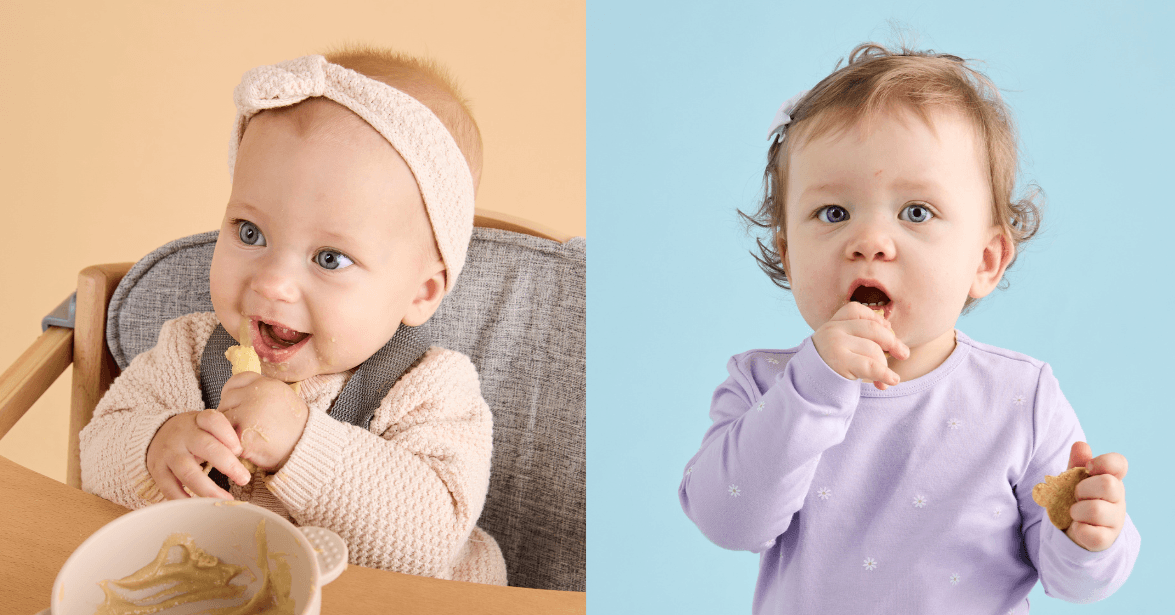
Playing with food, like scattering Little Bellies puffs for your baby to pick up doubles as fine motor and pincer-grasp practice.
Simple, repeatable games like peek-a-boo and knocking down block towers build cognitive skills through repetition your baby can predict and enjoy.
Behaviors like hitting or screaming during play are common at this age and usually respond well to gentle redirection.
At around 8 months, babies seem to suddenly become more active, curious, and social. They are just realizing that there is a whole world around them. This makes it the perfect time to engage their skills through play. Interactive games are a great way to build key developmental areas while strengthening your parent-child connection.
By 8 months, your little one will be learning to sit up, scoot, and grab. You may be surprised by just how mobile they are getting all of a sudden! You want to support this newfound movement with games that enhance physical abilities. While at it, don’t neglect emotional, social, language, and problem-solving skills. Paying attention to everything will ensure comprehensive learning and development.
Let’s look at some examples of games to play with your 8-month-old across key development categories.
Gross Motor Skills Games
Assisted standing – Hold hands and gently pull baby up to standing. Support under arms as needed.
Rocking/bouncing – Sit with legs out. Place baby facing you and hold waist while rocking back and forth.
Rolling across lap – Lay baby across knees on tummy, hold torso while gently rolling left and right.
Dancing – Hold upright supporting feet to stand. Play music and sway together to the beat.
Crawling obstacle course – Create a soft crawling track and cheer your little one’s efforts!
Fine Motor Skill Games
Pick-up puffs – Scatter small finger foods like Little Bellies puffs for 7+ months babies for your little one to grasp and safely self-feed. This is a very important skill to develop! Read herewhy.
Fill and dump buckets – Use containers for dropping toys in and taking them out.
Passing game – Roll balls back and forth. Your baby will inevitably miss, so be sure to help retrieve misses while still keeping up the enthusiasm.
Splashing tubs – Allow pouring from cups and splashing during bath time.
Highlight toys – Shine a flashlight beam on various objects then have your little one grasp them as you highlight each one.
Picture book reading – Label images, characters, and actions on pages. In the beginning, you’ll do the labeling, but over time, let your little one take over.
Puppet shows – Have stuffed animals talk to each other and your baby.
Sing songs – Gesture motions to Itsy Bitsy Spider or other rhyming tunes.
Mirror talking – Describe facial expressions and objects while engaging with reflection.
Making sounds – Have stuffed toys make animal sounds. Encourage your baby to imitate.
Cognitive Development Games
Peek-a-boo – Hide face behind hands then open wide while saying “peekaboo!”
Search tasks – Show baby a favorite toy then hide under blankets for them to pull back and find. Swap hiding spots.
Matching shapes – Guide placing cubes, balls, etc. in matching holes of toddler busy box.
Knock down towers – Build small block towers and let baby swat down. Build back up again for repetition.
Pop-up toys – Allow baby to press levers and buttons making exciting motions happen. React with encouraging oohs and ahhs.
Emotional Development Games
Chase games – Crawl after baby for giggles. Let them “get away” and then tickle when caught.
Mirror faces – Make happy, sad, and surprised expressions together in a mirror. Name the emotions.
Babble back and forth – Respond to coos with exaggerated melodic sounds.
Imitate play – Stick out your tongue for your little one to copy. Do raspberries or other silly behaviors for your baby to model. Laugh together.
Massages – Rub gently baby’s arms, legs, back, and tummy.
How to Play with an 8-Month Baby
As you can see, playing with your 8-month-old involves interactive and sensory-rich activities. Engage in simple games that encourage exploration and stimulate their developing senses. From peek-a-boo to sensory play, make each moment an opportunity for connection.
Consider playing daily games in short 5-10-minute sessions. This will nurture amazing development leaps. Tap into your baby’s interests and emerging abilities to guide joint play. Most importantly, follow their cues and keep it fun!
Remember, these interactive games are designed to promote your baby’s mobility, learning, and imagination. For you, try to enjoy the magical two-way connection you are getting during these precious months!
Handling Challenging Behaviours During Play
Managing Hitting: Gently redirect your baby’s hands towards soft toys or your hands. Gradually, they’ll learn appropriate ways to explore and engage.
Addressing Screaming for Fun: If your baby screams during play, stay calm and respond with a soothing voice. Offer comfort and slowly introduce quieter activities to shift their focus.
Final Thoughts
While this is a pretty big list of games you can play with your 8-month-old, it does not include all the games that babies can enjoy at this age. Do not be afraid to create your own games based on your baby’s interests and abilities. The most important thing is to have fun, be playful, and follow your baby’s cues.
So take advantage of this opportunity to play with your little one as you nurture their development. Embrace the joy of discovery and cherish the precious moments of laughter and connection!
As your baby grows into toddlerhood, you’ll find continued play-and-snack inspiration in our toddler snacks range.
What Activities Help an 8-Month-Old’s Development?
A mix of gross motor (assisted standing, crawling games), fine motor (picking up puffs, fill-and-dump play), language (picture books, songs), cognitive (peek-a-boo, search tasks) and emotional (chase games, mirror play) activities covers the key developmental areas at this age.
How Long Should Play Sessions Be at 8 Months?
Short and frequent works best , aim for daily sessions of around 5 to 10 minutes rather than one long block of play. Following your baby’s cues matters more than hitting a specific length.
What Is Sensory Play for an 8-Month-Old?
Sensory play means activities that engage touch, sound, sight, or taste , things like splashing in the bath, exploring different food textures, listening to music while dancing together, or shining a flashlight on toys. It supports brain development by giving your baby varied input to explore.
Is It Normal for My 8-Month-Old to Hit or Scream During Play?
Yes, this is a common part of this stage as babies test cause and effect and build emotional regulation. Gently redirecting hitting toward soft toys, and staying calm and soothing during screaming, generally helps more than a strong reaction.
Little Bellies
Little Bellies is passionate about creating organic, wholesome, and delicious foods for babies, toddlers and kids. Working alongside dietitians, feeding experts and fellow parents, we share practical, age-and-stage appropriate guidance to support families through feeding, developmental milestones, and everyday realities of parenthood.
From first tastes to toddler snacking, we encourage little ones to explore new flavors, shapes and textures as they build important feeding skills, confidence, and independence. As a trusted resource and partner, we’re here to support parents as they navigate their own journey alongside each stage of their little one’s growth.