

Colorful Food Activities for Preschoolers to Encourage Fruit & Vegetable Variety
Reading time:
Reading time:
By Lauren Mahesri, RD
You might be tempted to say “stop playing with your food” when you’re frustrated at the dinner table and your picky eater won’t take a bite. But playing with food actually serves a huge purpose in your little one’s development and their relationship with food.
Ironically, it’s one of the best ways to get them to eventually eat new foods and become a more adventurous eater. I know letting your kids run wild with a meal you worked hard on might sound overwhelming, so let’s cover some strategic food activities for your preschooler, why they work, and how it helps them expand their diet to include more fruits and vegetables.
Food play does more than make a mess. It fuels your kiddo’s development and helps them warm up to new foods they’re hesitant about, like fruits and vegetables. One reason picky eaters struggle with produce is its natural variety: some blackberries are more tart than others, and no two pieces of broccoli are shaped quite the same.
The more exposure kids have to this unpredictability, the more comfortable they become, and food play is one of the easiest ways to build it. Here’s what’s happening behind the scenes:
It may take 8 to 10 exposures before a child is willing to try a new food, and playing with it is a low-stakes way for your child to get familiar with it before it shows up on their dinner plate. The more relaxed encounters they have with fruits and vegetables, the less new and scary it feels when it’s in a meal.
If mealtimes feel like a battle, your kiddo can start to associate food with tension. Giving them another way to interact with fruits and vegetables, away from the pressure of eating them, helps keep those foods feeling positive and approachable.
For kids with texture or sensory sensitivities, food play is a gentle form of desensitization. Exploring a food through touch, smell, and sight in a low-pressure way lowers that initial reactivity and builds willingness to eventually taste it
Food play gives your child hands-on practice with the palmar grasp (holding with the whole hand), the pincer grasp (picking up with finger and thumb), hand-eye coordination, and using both hands together.
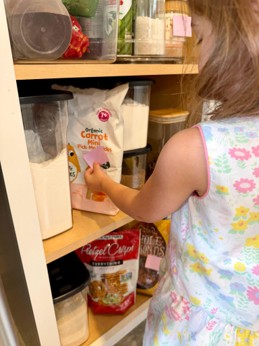
Hand your little one a stack of sticky notes and head to the pantry or fridge. Give them a color or a letter, and let them stick a note on anything that matches. This helps them recognize and name new fruits and vegetables and builds familiarity with foods they wouldn’t normally eat.
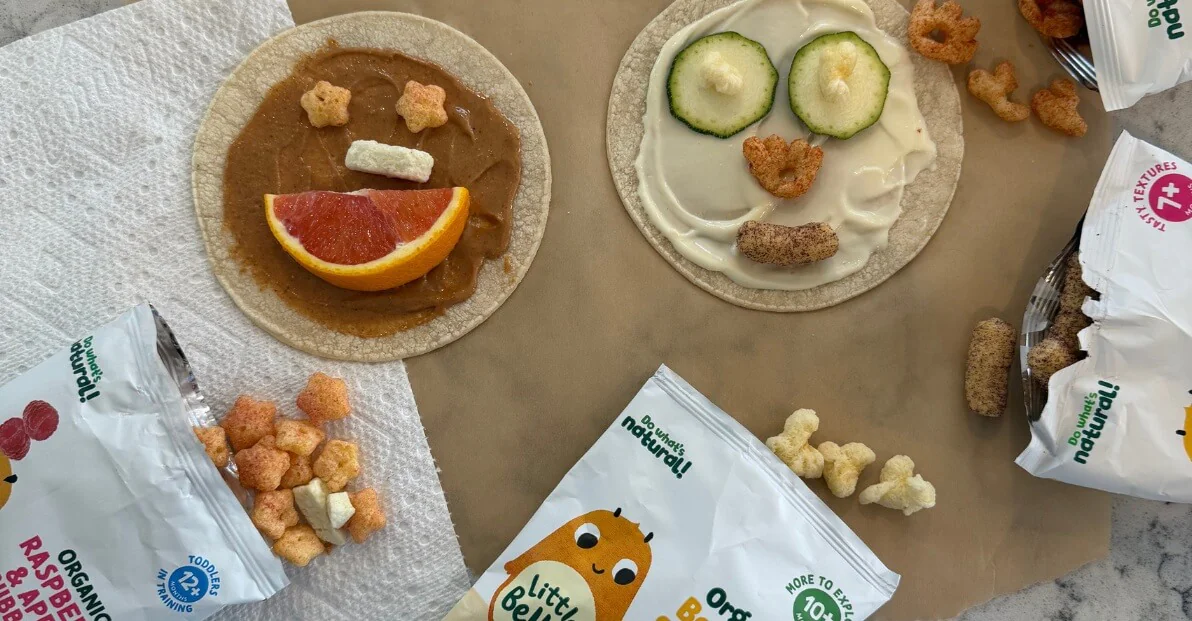
On a piece of toast or tortilla, use a base spread like nut butter, hummus, avocado, or cream cheese, then set out a variety of fruits and vegetables and let them build a funny face.
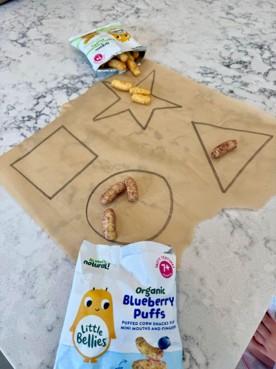
Draw a few shapes on a piece of paper and set out an assortment of fruits, vegetables, and snacks. Give them a sorting rule: “put the crunchy foods in the triangle and the soft foods in the square,” or sort by color or food group.
Cut fruits and vegetables in half, dip them in washable paint, and let your child use them as stamps. Bell peppers, cauliflower, broccoli, and zucchini all make fun prints. Since there’s zero pressure to eat anything, it’s great for building a positive relationship with food while working those fine motor skills.
Make a visual grocery list using pictures of the fruits and vegetables you need, then let your child hold the list and find each item at the store. Name and visual identification of produce is a great first step of exposure for extreme picky eaters.
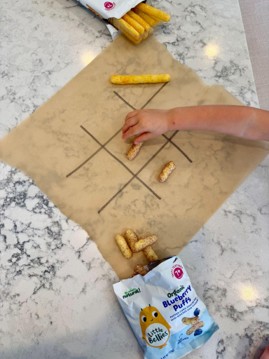
Draw a tic-tac-toe board on paper and use two different foods as your game pieces. Play against each other, and model taking bites as you go to gently encourage eating.
Make a smoothie together and let your toddler be the recipe writer. It’s a lower-mess version of cooking, since it’s one blender and minimal cleanup, but they still get to be hands-on adding and mixing the fruits and veggies.
Grab a piece of string and thread on foods that are easy to poke through, like berries, apples, pears, or Little Bellies Sweet Corn Round-a-Bouts. You can even shape produce into its own jewelry, like bell pepper bracelets or cucumber rings.
| Activity | Best Age | Mess Level | Skills Supported |
| Sticky Note Scavenger Hunt | 3-5 | Low | Letter and color recognition, food familiarity |
| Funny Faces | 2-5 | Medium | Pincer grasp, creativity |
| Shape Sorting | 2-5 | Low | Sorting, early categorizing |
| Paint Stamping | 3-5 | High | Hand strength, cause and effect |
| Picture Grocery List | 2-5 | None | Matching, food familiarity |
| Tic-Tac-Toe | 3-5 | Low | Turn-taking, hand-eye coordination |
| Smoothie Builder | 2-5 | Medium | Pouring, following steps |
| Jewelry Making | 3-5 | Low | Threading, pincer grasp, coordination |
For food play to actually help your kids eat more fruits and vegetables, here are a few things to keep in mind:
Getting your little one to warm up to new foods can be a long and sometimes frustrating process. Building trust with new foods and giving our kids time to develop new skills takes patience, and every playful moment is moving them in the right direction.
Little Bellies puffs, Pick-Me Sticks, and freeze-dried snacks are a great on-the-go option for food play when you’re out and about. Kids love the crunchy textures, which makes them an easy way to introduce the flavors of foods that can be tricky to serve fresh, like carrot, corn, and pumpkin.
With organic, age-and-stage appropriate options for every preschooler, they’re a simple way to keep the exposure going and give little hands some fine motor practice wherever you are.
Easy food activities include using fruits and vegetables as paint stamps, sorting produce by color or shape, doing an at-home scavenger hunt with food, or making funny face creations with produce. These activities offer low pressure exposure to help expand their diet.
Yes! Playing with food gives kids low-pressure exposure to new foods, which builds trust and familiarity and makes them more likely to eat those foods when they show up on their plate.
Try introducing vegetables away from the table during play, where there’s no pressure to eat. You can also start with a snack like Little Bellies puffs and use food chaining: begin with blueberry puffs, move to other blueberry-flavored foods, then work toward fresh blueberries.
There’s no need for kids to stop playing with their food. It’s a great way to get hands-on exposure that helps them expand their diet and build motor skills. As they get older and more coordinated, invite them to help you cook so they keep getting those hands-on food experiences.


Let’s Make It Official
Get the latest news on parenting tips, food play hacks, promotions and giveaways!
Subscribe Now