

The Best Vegetables for Your Baby at All Stages
Reading time:
Reading time:
Just like fruits, vegetables are a great source of important nutrients for your child including vitamins, minerals, antioxidants and fibre. Most of them will also have savoury, umami or slightly bitter flavours that are all very important to expand your baby’s familiarity with a wide range of flavours, colours and textures to build a positive relationship with food and lay down good eating habits.
But with so many great veggies to choose from, how do you choose and tell what’s good for your child’s developmental stage? We’ve consulted with our top child nutritionists and paediatricians to put together this guide for you!
The ideal first vegetables between 4-6 months are soft, mild in flavour, and unlikely to cause allergic reactions. Try these as nutritious starters:
Cooking thoroughly breaks down fibrous textures to delicate smoothness. Focus on single-ingredient purees and gradually over time combine them with oats, cereals or fruit as your little one learns to appreciate them.
More thoughts and insights from Leah Hackney, RD, LD, CSP, to guide you through this exciting journey in her article Introducing Solids.
Vegetable purees are a great way to introduce solids or explore new flavours with your baby. You can make vegetable purees by blending cooked or raw vegetables with some water, breast milk, formula, organic natural unsweetened yoghurt or organic and low-sodium (preferably grass-fed) bone broth.
Here are some simple and super delicious vegetable puree ideas that you can try with your baby:
For baby-led weaning, choose vegetables that are easy for little hands to hold and play with.
For additional insights, read our article Baby Led Weaning – Tips for New Parents.
Aim for a rainbow of colourful vegetables and new textures.
Note: all of the above vegetables are appropriate from 4 months when first starting solids. These are so good, there is no reason to wait till 8 months!
Toddlers can nibble a wide variety of vegetables. Prioritise these super nutritious and colourful selections.
Toddlers are still honing their eating skills so always stay nearby while they eat. Monitor chewing and watch for gagging on textures. Cut vegetables into manageable sizes, steam them for tenderness, or offer them roasted at first.
For continued snacking through toddlerhood, explore the full range of toddler snacks.
Beyond picking the best veggies, keep these age-specific tips in mind:
Pairing vegetable nutrients with your baby’s evolving motor skills ensures healthy, safe food exploration.
Some vegetables require extra caution. Typically, these veggies are allergenic, acidic, or choking hazards. Here are some examples:
Sweet potato and butternut squash are two of the best first vegetables. Both are soft when cooked, mild in flavour and packed with nutrients like beta-carotene and potassium, which makes them easy to puree for a baby’s first tastes.
Start with single-vegetable purees like sweet potato, pumpkin, carrot or butternut squash, then try simple combinations such as spinach and sweet potato, cauliflower and cheese, or butternut squash and apple. Blend with water, breast milk or formula until smooth and soupy for younger babies.
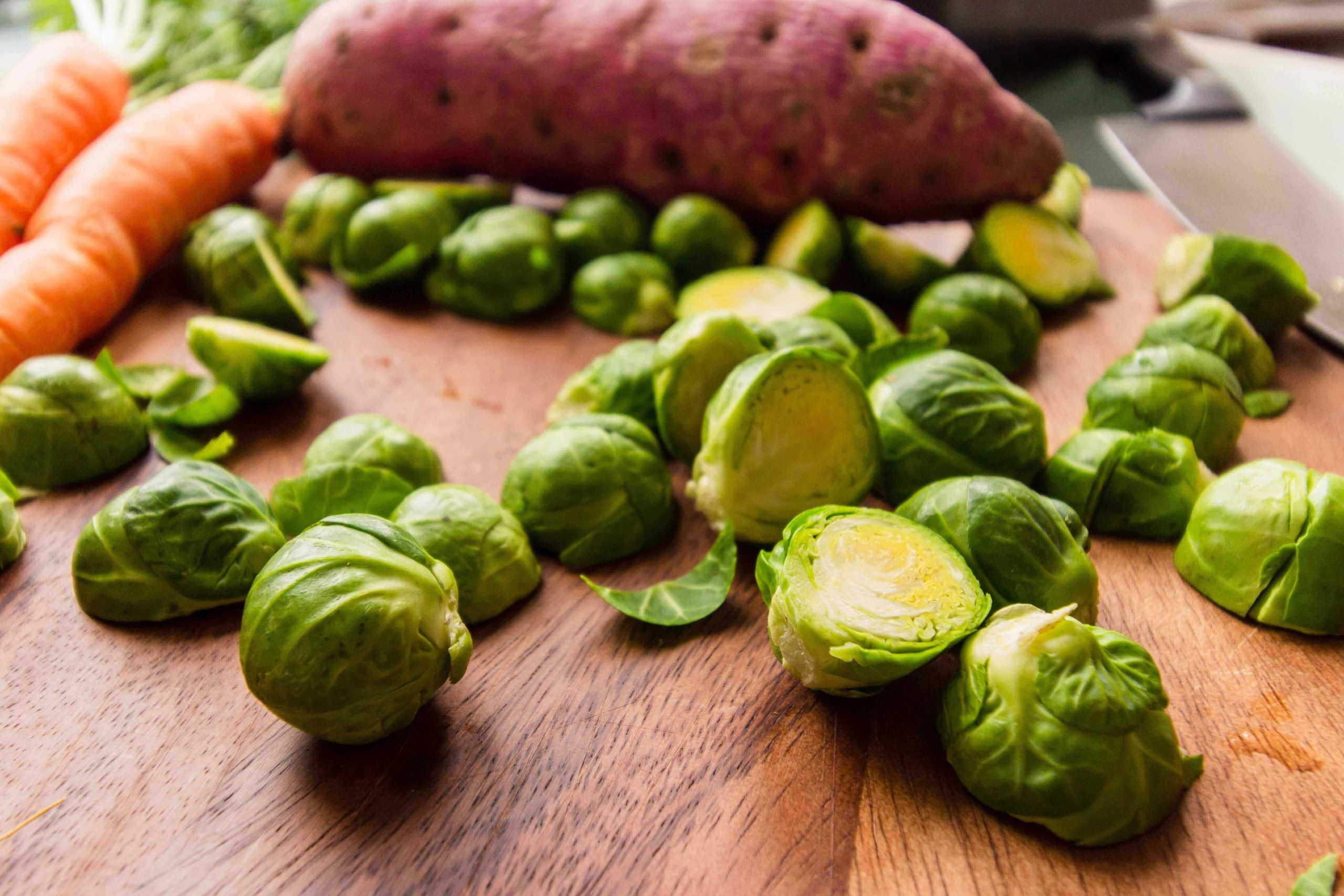
Toddlers can enjoy a wide variety of vegetables cut into small pieces, including Brussels sprouts (halved), asparagus, snap peas, broccoli and cauliflower florets. Lightly steaming or roasting keeps them tender, and offering them repeatedly without pressure helps toddlers learn to like them. Our guide to Picky Eating Meal Ideas for Babies and Toddlers has more ideas for fussy veggie eaters.
Hard raw vegetables like carrots are a choking hazard for babies and young toddlers. Cook, grate or mash hard vegetables until soft, and cut them into age-appropriate shapes and sizes before offering them.
As your infant transforms into an independent toddler, introducing veggies will have tremendous nutritional benefits for them. Go for bright colour varieties that offer nutrients and fibre while being easy to digest. Then, while respecting your little one’s unique pace, slowly advance through purees into mashes, finger foods, and finally chopped produce.
Try to cultivate a love of veggies in your baby by incorporating these nutrient-dense choices at every stage of their development.
For more information on how to introduce veggies into your baby’s diet, please read our article Broccoli, Brussel Sprouts & Beetroot: How to Have Fun with Vegetables.
Bon Appetit!
Photo by Louis Hansel on Unsplash


Let’s Make It Official
Get the latest news on parenting tips, food play hacks, promotions and giveaways!
Subscribe Now