

Building Your Village: How Walking Groups Bring Parents Together
Reading time:
Reading time:

Early parenthood can be joyful and lonely at the same time, and plenty of parents feel it even when they’re surrounded by people. Wanting your own people around you isn’t a sign that anything’s wrong, it’s a sign you’re human. This guide looks at why connection matters so much right now, why walking groups are such an easy first step, and how to find or start one. You’ll also find gentle pointers for the days that feel harder.
The old idea that raising children works best with a community around you still holds, even though many families now live far from relatives and long-time friends. A village spreads the small, everyday support that makes parenting feel more manageable.
Modern life has quietly chipped away at that village for a few reasons:
The Raising Children Network points to social connection as one of the things that helps parents feel supported and cope with the ups and downs of family life. Building that connection doesn’t have to be a big project. It can start with a single walk.
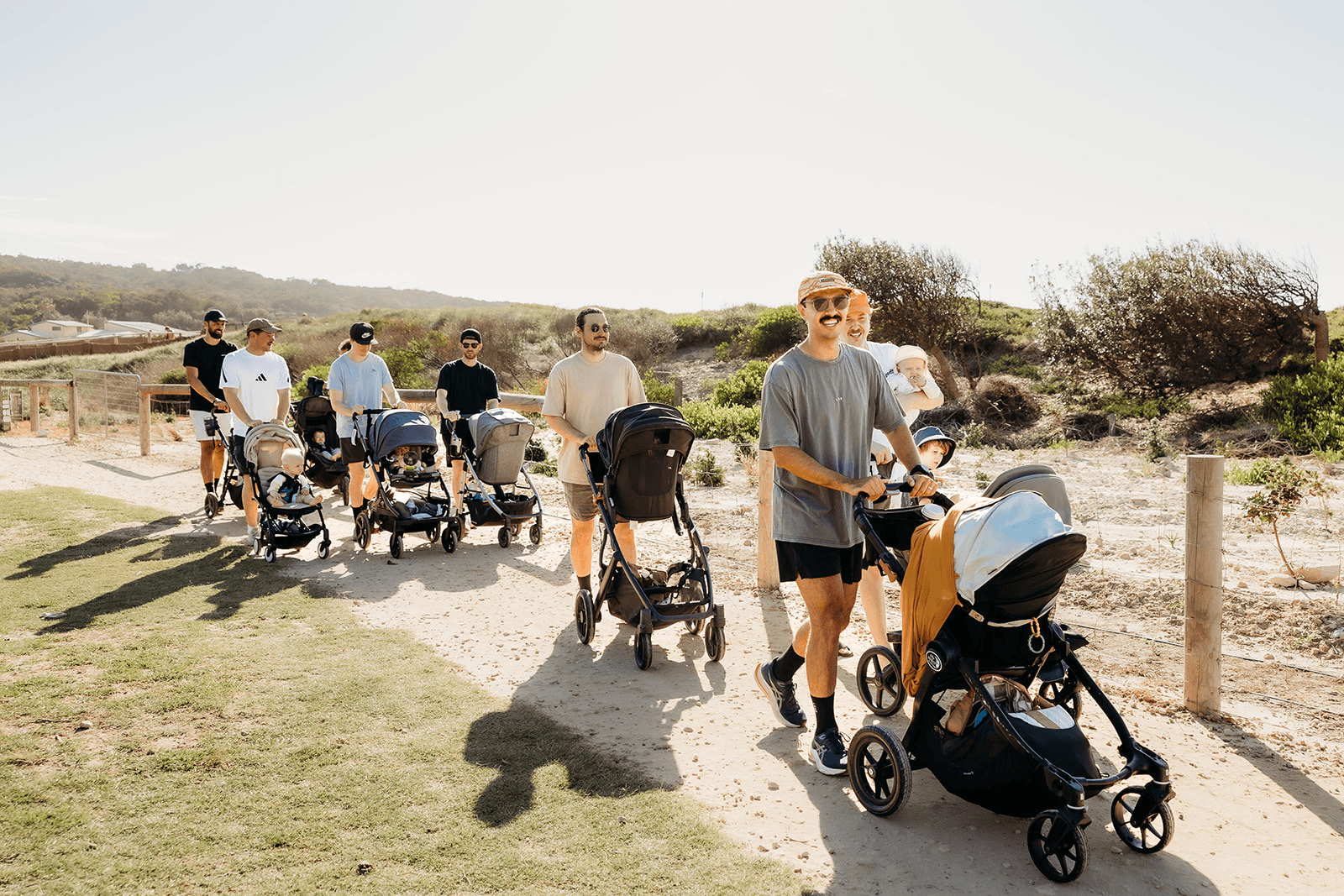
Walking groups take the pressure off, because the walk itself carries the social weight, so there’s no performance and an easy exit if you need one. You’re all there to move and get outside, which makes the company feel natural rather than forced.
A few things make them especially easy to say yes to:
There’s a nice bonus, too. You get gentle movement and fresh air alongside the company, which our companion guide on the benefits of walking for families covers in more detail.
There are several easy on-ramps to connection, and any one of them can be the start of your village. You don’t have to pick the perfect option, you just have to start somewhere.
Here’s how a few of the most common options compare:
| Way to connect | Best for | How to get started |
| Local walking group | Gentle movement plus company, little ones welcome | Follow local parent groups, walking communities and community organisations on Instagram or Facebook, or search your local council’s website for groups near you. |
| Mothers’ or parents’ group | Structured early support, meeting others at the same stage | Ask your maternal and child health nurse, local council or community centre about groups for parents with little ones around the same age. |
| Playgroup | Little ones playing while parents chat | Search Playgroup Australia or follow your local playgroup organisation on social media to find sessions near you. |
| Online parent community | Connection from home, flexible around nap times | Join local Facebook groups or follow parent communities in your area to hear about meet-ups, events and other ways to connect. |
Try one, or try a few. The first hello is almost always the hardest part, and it usually gets easier from there.
You don’t need a big group or a detailed plan to get started. A couple of parents, an easy route and a time that works is enough.
Here’s a practical way to set one up:
Your first walk might only be two or three people, and that’s plenty. Once you’ve done it a few times, you can keep sharing the details locally and let the group grow naturally.
Getting out, meeting new people or even sending a message can feel like a lot on some days. If you’re finding things particularly tough, you don’t have to figure it out on your own.
A few places to start:
Finding your people can start small – a regular walk, a familiar face at the park or one other parent to share the week with.
From 24 to 30 August, Little Bellies is supporting local mum walks across Australia, New Zealand, the US and Canada as part of its Do What’s Natural philosophy, helping create more opportunities for parents to get outside and connect in their communities.
This is one of a number of ways Little Bellies plans to support parent communities, with more initiatives to come. Follow along on their socials to see what’s coming next.
Ask your maternal and child health nurse or local council, search Playgroup Australia, or look for local parent groups online. A walking group is often the easiest to join, since little ones come along and there’s no cost.
Yes, it’s very common, even when you’re surrounded by people. Naming it is a good first step, and reaching out to other parents or a support service like PANDA or Beyond Blue can help.
Pick a regular time and an easy, pram-friendly route, then invite a couple of parents you know or post in a local parents’ group. Groups usually grow from that first small step.
Water, a spare nappy, weather-appropriate layers, and an easy snack for little ones aged 7+ months, like Organic Strawberry Pick-Up Sticks, to keep them content along the way.



Let’s Make It Official
Get the latest news on parenting tips, food play hacks, promotions and giveaways!
Subscribe Now