Food Play and Brain Development: Why Mealtimes Matter
Reading time:
Reading time:
As parents, we juggle so many tasks every day, and it’s easy to think of mealtimes as just another box to tick. The good news is that mealtimes are a wonderful setting for your little one’s development, through play, connection and shared experiences. And you don’t have to do more than you’re already doing.
To dig into how food play and shared meals support little brains, we talked to Simone Emery, a children’s occupational therapist and mum of two. Here’s what she shared, from emotional connection to the new pathways your little one builds with every bite.
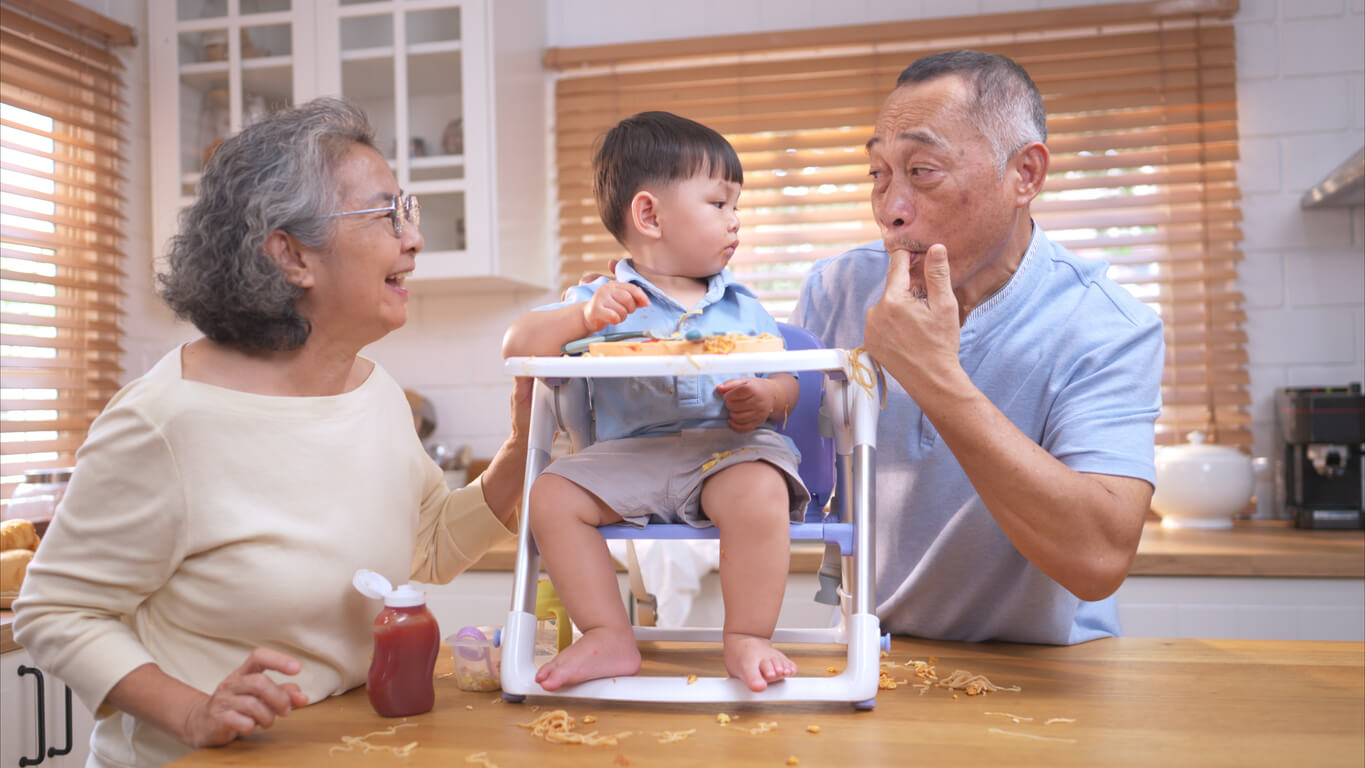
Connection is your parenting superpower, and mealtimes are a perfect time for connecting. Eating together brings emotional connection, sensory learning and plenty of practice with new skills, all in one place.
Research on family meals backs this up. Kids Health NZ encourages families to eat together whenever they can, reminds parents that weekend breakfasts and lunches count too, and notes that babies start learning about food by watching what you do at mealtimes.
At a mealtime, conversation starts flowing, stories are told and a sense of belonging follows. Inside the brain, mirror neurons start firing, which helps sync moods and builds empathy and co-regulation.
Have you noticed a toddler looking around the table and then joining in when laughter breaks out? They may not know why everyone is laughing, but they feel connected and safe, so they mirror the emotions around them.
A child who experiences co-regulation from the people around them is building the foundations for managing their own emotions later in life.
When you learn something new, your brain is actively changing through a process called neuroplasticity. Babies and children are learning all the time when they eat. Eating uses all the sensory systems and more muscles than you probably realise, and little ones are also taking in cues from everyone around them.
You may have heard the phrase “fire together, wire together.” When you repeat the same action, like eating from a spoon, all the active parts of your brain fire signals at the same time. Your hand curls around the spoon, your shoulder and elbow lift, your forearm swings towards your mouth (to the exact distance you know) and you open up.
Now try this: curl your fingers and lift your shoulder and elbow, but swing your arm over your far shoulder instead. Harder, right? The first action is a well-worn pathway, so it feels automatic. The far-shoulder swing is new, so it doesn’t.
Little ones are strengthening these pathways every time they eat. Food play and shared mealtimes, where mirror neurons are firing too, give them extra practice.
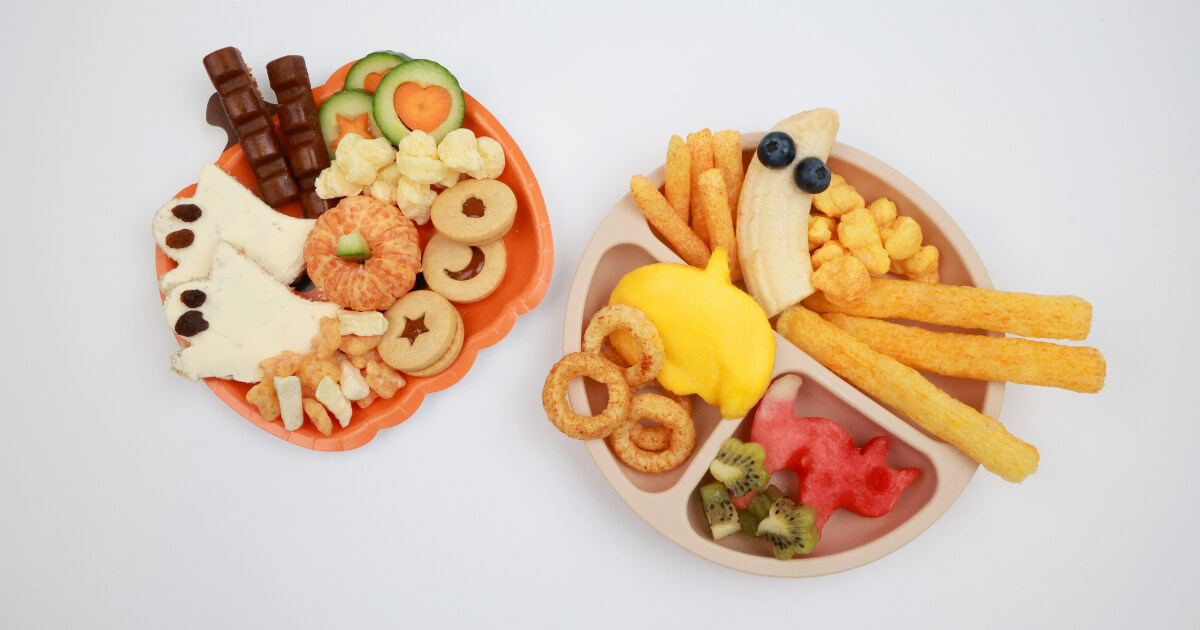
Food play is more than fun. When little ones play with food, they’re using all their senses to work out how it smells, sounds, feels and tastes. That’s a superhighway of information that helps them decide whether, and how, to eat something.
The more they experience, the more confident they feel. They can get all the information they need before deciding to go further, with a touch, a lick, a smell or even a bite, or to wait and learn about it another time. Food play is meaningful cognitive and emotional work.
Want some ideas to try? Our food play guide with tips, hacks and game ideas is a great place to start, and you can read more about how food play can transform picky eating.
Each type of food needs a different way of eating it, so little ones are always working on new motor skills at mealtimes.
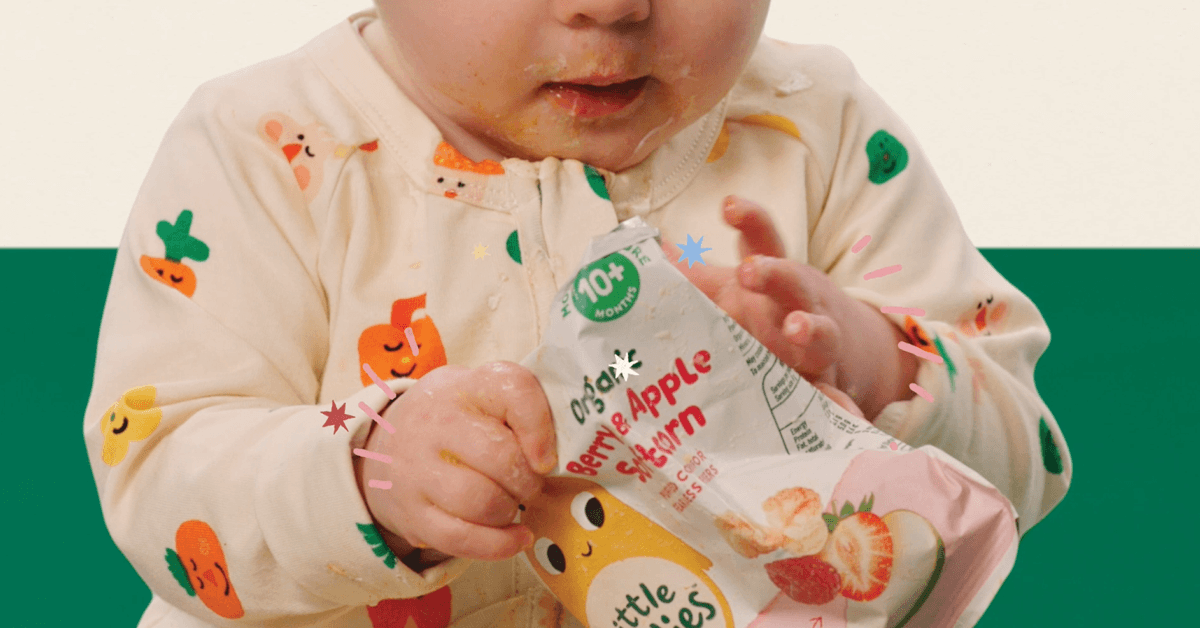
Hand skills. Finger foods help a child develop different grasp patterns. You can see it when a little one uses a full palm grasp on a banana, or a neat pincer grasp on a corn puff. Children have so many hand muscles to strengthen for things like handwriting, opening lids, getting dressed and brushing teeth, so why not build in practice through a variety of shapes, textures and sizes? Snacks designed for each stage can help. You can explore Little Bellies options by age: 7+ months, 10+ months and 12+ months. Looking for more on grasp skills? Read Playing With Food Benefits: Developing Fine & Gross Motor Skills.
Cutlery skills. Eating with cutlery takes different holds, turns of the wrist and movements to get food on and off the spoon or fork. It takes time and practice, so be patient with the spills.
Oral motor skills. This is one motor area that doesn’t always pop up on parents’ radar. Oral motor skills are the skills of the mouth that we use to lick, bite, chew and swallow. Coordinating the lips, tongue and jaw is a huge topic, but an example makes it easier to picture. Think about how much effort goes into a bite, chew and swallow of a well-done steak versus a spoonful of chocolate mousse. My mouth feels tired just thinking about a meal of celery sticks, corn on the cob and sourdough toast!
That’s why we often pair foods that take more oral motor effort with easier-to-eat foods:
Offering a variety of foods, eating with others and playing with food all help build the motor skills we need for eating, and the skills we need beyond the table. Every mealtime is more than “just eating.” It’s a real learning opportunity.
It can be hard to fit in a family meal that suits everyone’s schedule, food preferences and hunger cues. That’s why it’s reassuring to know that learning can happen at any food opportunity. A mealtime with your little one doesn’t have to add pressure to your day.
Eating together can happen at a table, on a picnic rug, at the park or in the backyard. To be honest, when my kids were young, we’d all have frozen yoghurt together while they were in the bath and I sat on the edge of it. It’s okay to make family mealtimes and snacks work in your own way.
Eating together regularly can also build a sense of belonging, which lays the foundation for connection with others as your little one grows.
Everyday food play and mealtime moments give your little one plenty of chances to connect, emotionally, mentally and physically. And you can never underestimate the power of a shared, saucy-lipped smile across the table!
Ready to bring more play to your little one’s snack time? Explore age-and-stage appropriate snacks from Little Bellies, made for little hands and growing explorers.
When we’re learning about something new, we don’t just pop it in our mouth straight away. Our senses tell us what it looks like, feels like, sounds like and smells like, and that’s important information for the brain.
Over a lifetime, we build up enough of this information to quickly decide whether to eat something. Little ones are still building theirs, and they look to us for cues. There’s also a natural caution about food built into developing brains, because not everything is safe to eat.
Food play lets them gather what they need before they decide to go further or wait and learn more another time.
Sharing a meal doesn’t need to be a formal event. Little ones can learn at breakfast, snack time or dinner. They learn best when they feel a sense of belonging and can copy someone who is also eating.
If the schedule is tricky, you could:
Be kind to yourself. Aiming for some shared mealtimes across the week is the goal, not every food opportunity.
Little ones learn about their senses: how does it smell, feel, sound and taste? They also use lots of muscles to play and eat while sitting, including their core, upper body, wrists, hands, fingers and the muscles of the face and throat.
Did you know that a single swallow involves more than 30 muscles and cranial nerves working together? The more little ones use these muscles, the more they learn how to use them.
They also build visual perception skills (often called hand-eye coordination). It can take lots of practice to lift a cup, bring it to your mouth, take a sip and put it back down. The spills are part of the learning process!
Yes, and it’s often a good sign that they’re exploring. Touching, squishing and smelling food gives little ones information about it, which can help them feel more confident about trying it. A little cleanup afterward is a small price for all that learning.


Let’s Make It Official
Get the latest news on parenting tips, food play hacks, promotions and giveaways!
Subscribe Now